Why an Abruzzo Wine Tour Beats the Tuscany Default
Let's be honest. When most people start planning wine tours in Italy, their mind goes straight to Tuscany. The rolling hills, the Chianti vineyards, the postcard-perfect scenery. And look, Tuscany is wonderful. Nobody is here to argue otherwise.
But here's the thing: while everyone else is elbowing their way through crowded Florentine wine bars and paying premium prices for the "classic" experience, there's an entire region on the Adriatic coast quietly producing some of Italy's most exciting bottles. Abruzzo. Rugged, authentic, and almost criminally underrated by international visitors.
If you've already done a few wine tours and you're ready to go deeper, this list is for you. We're talking about a region where the locals actually outnumber the tourists, where a glass of Montepulciano d'Abruzzo costs what it should, and where the winemakers still have time to sit down and talk with you. Stick around, because we're about to give you seven very good reasons to rethink your Italian wine tour itinerary entirely.
Abruzzo's Wine Tourism Moment Is Happening Right Now
If your Italy research keeps pointing you toward Tuscany, that's not your fault. It's just what the algorithm has learned to recommend. But the numbers, and a growing chorus of serious wine voices, are telling a different story right now, and Abruzzo is at the centre of it.
The global wine tourism market hit $46.47 billion in 2023 and is projected to reach $106.74 billion by 2030, growing at a 12.9% annual rate. That is a doubling of the market inside a single decade. The regions that build credibility and visibility during this expansion window are the ones that will define the next generation of wine travel. Abruzzo is entering that window early, before the mainstream tour operators have caught up.
The editorial world has noticed. VinePair named Abruzzo one of the ten best wine travel destinations in the world for 2026, placing it alongside Central Otago, Salta, and Jerez. The specific framing is worth quoting directly: Abruzzo "offers serious Italian wine and a real natural-wine current without the price tag of better-known regions." That is not a consolation mention. It is a precise description of what a certain kind of traveller is actively looking for, and it points squarely at Abruzzo.
Italy's wine tourism boom provides the broader backdrop. Wine-motivated trips to Italy grew +12% versus 2023, inside a national food and wine tourism sector generating €40.1 billion annually. Yet the coverage, and the tour operator portfolios, remain concentrated on Tuscany, Piedmont, and Veneto. Tuscany alone draws an estimated 14 million wine-motivated visitors. Abruzzo draws serious producers, dramatic landscapes, and a fraction of that foot traffic.
That gap is the opportunity. International visitors are still a premium, underdeveloped segment in Abruzzo wine tourism, which means the region has not yet experienced the kind of saturation that has transformed parts of Chianti into a logistical exercise rather than a genuine encounter with place. The 2026 guide to wine tourism in Italy confirms the region's growing profile, but the infrastructure for international travellers remains genuinely intimate in scale.
If you are planning wine tours in Italy and the search results keep serving you the same Florentine hill towns, consider that the algorithm has simply not caught up yet. Abruzzo has.
The Wine Is World-Class and Still Underpriced
Here is what makes Abruzzo genuinely exciting for anyone who takes wine seriously: the quality is already there. The recognition is just catching up.
Montepulciano d'Abruzzo: $50 Quality at $15
Montepulciano is the second most planted red grape in Italy after Sangiovese, yet it consistently flies under the radar of casual wine buyers. The grape produces structured, deeply coloured reds with rich black fruit, firm tannin, and real ageing potential. James Suckling's team ran a feature explicitly benchmarked as "$15 wines that taste like $50," and Montepulciano d'Abruzzo was the headline act. Producers like Torre dei Beati, Binomio, and Tiberio were singled out as delivering complexity that punches well above their price category. For context, a comparable level of structure and concentration in a Barolo or Brunello di Montalcino would cost three to five times as much. Food & Wine magazine reinforced this in November 2025, calling Montepulciano d'Abruzzo the best-value Italian red that consumers are still sleeping on. A younger generation of winemakers is also refining the category, reducing extraction and experimenting with amphorae and concrete vats to produce fresher, more food-friendly styles.
Cerasuolo d'Abruzzo: Not Your Average Rosé
Most travellers arrive in wine country expecting rosé to mean pale, dry, and delicate. Cerasuolo d'Abruzzo is a different conversation entirely. Made from Montepulciano grapes with extended skin contact, the wine takes its name from cerasuolo, meaning cherry-coloured, and it earns that description. The result is a rosé with real depth, structure, and sometimes enough colour and body to be mistaken for a light red. Gambero Rosso included it in their dedicated Vini d'Italia 2026 tasting cycle, confirming sustained critical attention at the highest level of Italian wine assessment. Outside specialist circles, though, the appellation remains largely unknown, which is exactly what makes it so interesting to discover on a wine tour.
Pecorino and Trebbiano: The Whites Worth Knowing
Pecorino, the grape rather than the cheese, is having a clear commercial moment in Abruzzo. In Gambero Rosso's most recent tasting cycle, Pecorino submissions outnumbered Trebbiano d'Abruzzo entries by roughly 100 to 60, a telling signal of producer confidence in the variety. It produces mineral-driven, aromatic whites that natural wine producers across the region are increasingly working with. Trebbiano d'Abruzzo, meanwhile, sits at a different point on the recognition curve. In the hands of producers like Valentini, who uses only the best five to ten percent of fruit from 60 hectares and bottles without fining, filtering, or added sulphur, it becomes one of Italy's most age-worthy and complex white wines, requiring 15 to 20 years of cellaring before showing its full character. That fact is almost entirely unknown outside specialist circles, which is part of what makes discovering these wines through a dedicated wine tour feel like finding something real rather than following a guidebook.
The Languedoc Parallel
The "serious wine without the price tag" argument is not a consolation prize. It is a genuine market insight with historical precedent. In the 1990s, Languedoc producers were making wines that matched Bordeaux in quality while trading at a fraction of the price. Buyers who understood that early built extraordinary cellars cheaply. The same dynamic is now playing out between Abruzzo and Tuscany. VinePair named Abruzzo a top-ten wine destination for 2026 precisely because of this combination: serious Italian wine, a credible natural wine current, and prices that have not yet caught up with the quality. That window does not stay open indefinitely.
You Will Meet the Winemaker, Not a Tour Guide
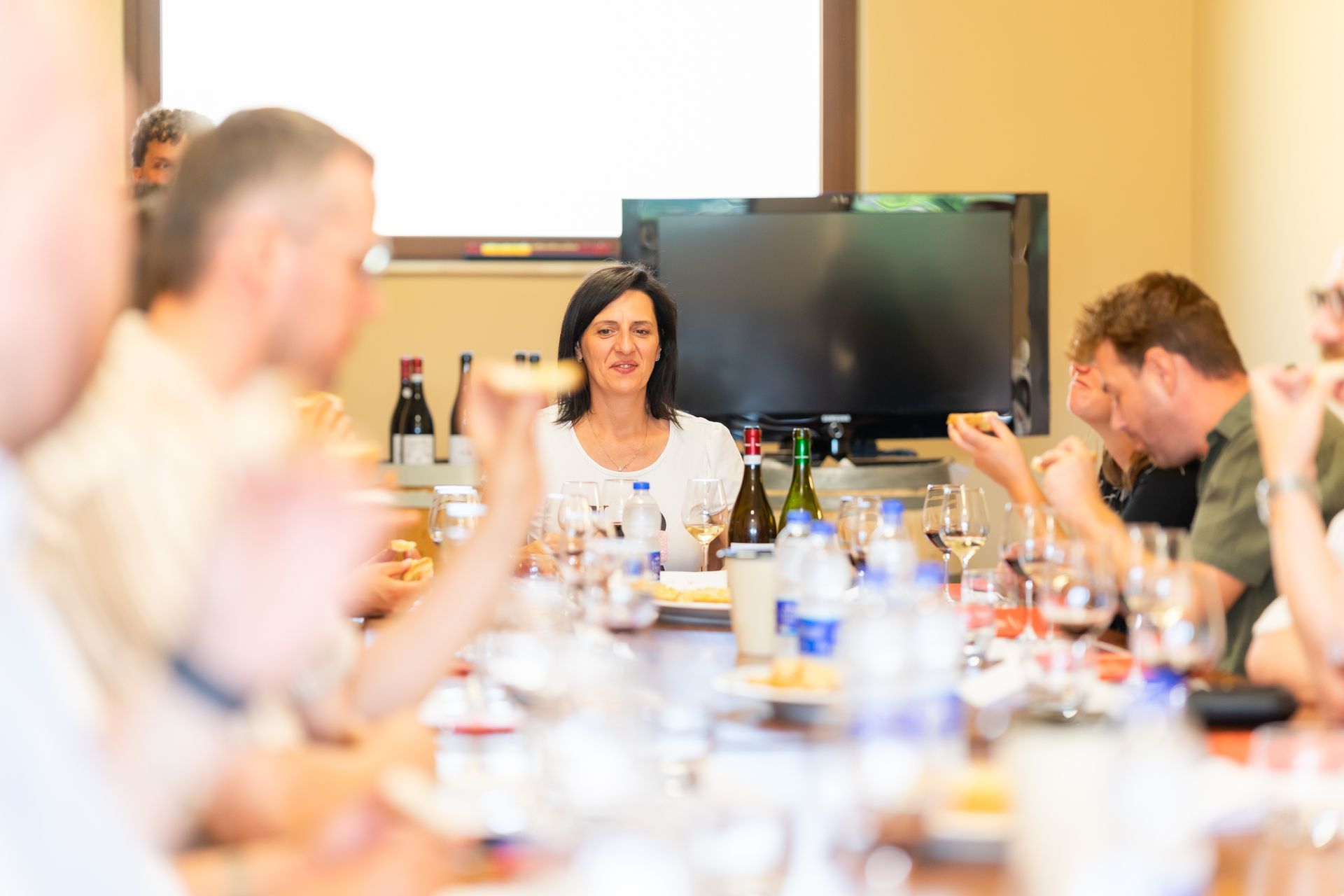
There is a detail worth understanding before you book any wine tour in Italy: in most of the country's famous wine regions, the person pouring your glass is a hospitality professional. They are good at their job. But they did not grow the grapes, they did not make the decisions in the cellar, and they will not be up at dawn tomorrow checking on fermentation. In Abruzzo, that person is usually still the winemaker themselves.
Academic research published in MDPI Heritage (2023), comparing wine tourism in Abruzzo with the Douro Valley in Portugal, found that sensory experience was the primary driver of visitor satisfaction in Abruzzo. Not the label, not the tasting menu, not the venue. The physical environment, the human connection, and the sense of place. What that research is pointing at, in practical terms, is that when you walk a vineyard row with the producer and they stop to pinch a leaf and explain a decision they made in April, something registers that no tasting note can reproduce.
The Access Problem Is Real, and Most Visitors Never Solve It
Most small producers in Abruzzo do not run an open-door tasting room. They operate by appointment, often via a phone call to a number that does not appear on any booking platform. A local resident confirmed on a travel forum in early 2026 that "most Abruzzo wineries don't open a tasting room every day, just on request." That is not an obstacle for locals. It is a significant barrier for international visitors relying on OTAs or generalist itinerary platforms, most of which have not meaningfully indexed Abruzzo's independent producers.
This is where a connected local ground partner changes the equation. borGO's network of 160+ local partners across Abruzzo includes winemakers who have collaborated directly with the team to build experiences around the harvest calendar, seasonal food pairings with other local producers, and the stories that sit behind each label. Many of these winemakers have never worked with a tour operator before. The visits they offer through borGO are not listed anywhere else.
What a Visit in the Villamagna Hills Actually Looks Like
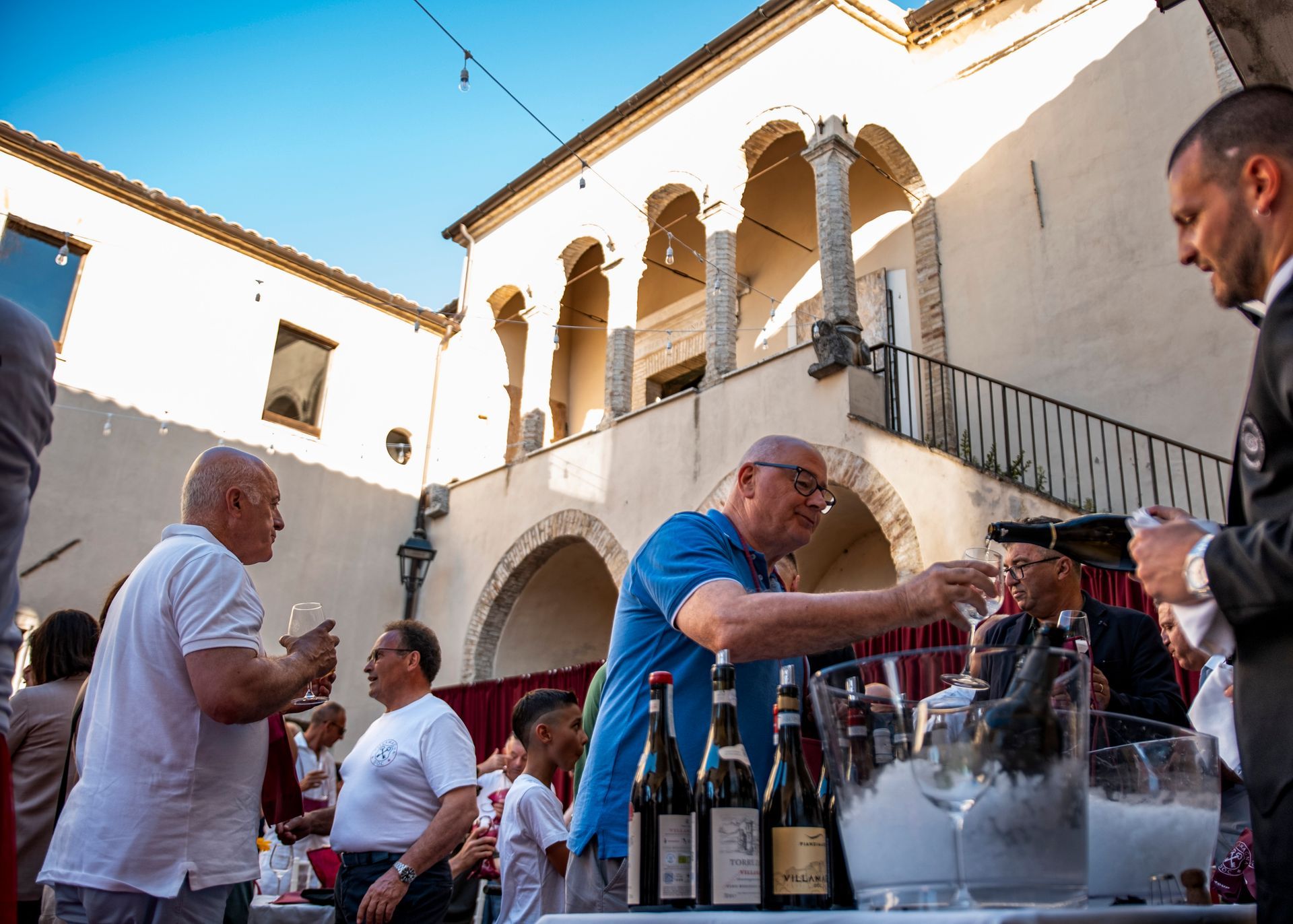
A typical cantina visit in the Villamagna Hills does not follow a script. The producer walks you through the vineyard, not because it is on the itinerary, but because the vineyard is where the conversation starts. In the cellar, they pour from unlabelled bottles, wine still being assessed for the next vintage, and they talk through their choices with the frankness of someone who is not selling you anything yet. You might eat mutton, pasta, and local cheese alongside wines that do not exist on any retail shelf. Experiences like this one at Castorani winery near Alanno have been described as something "no chefs in the world can give you," precisely because the family is present at every stage.
The Tuscany Comparison Is Not About Snobbery
The contrast with Chianti is structural, not aesthetic. In Tuscany, the economics of wine tourism have matured to the point where the producer visit has become a ticketed, timed, often pre-purchased experience delivered in a purpose-built visitor centre. That model works efficiently. It scales. It also removes most of the spontaneity and personal access that made those visits compelling in the first place.
In Abruzzo, producers working directly with visitors still treat the encounter as a personal introduction, not a product to be packaged. That is a finite window. Wine Enthusiast named Abruzzo its Wine Region of the Year in 2022, VinePair has placed it in the top ten destinations for 2026, and the international travellers are beginning to arrive. The winemaker who walks you through his cellar today and pours you something still unnamed may be running ticketed tours in five years. The conditions that make this kind of access possible are not permanent, and the travellers who move now will experience something that will not be on offer indefinitely.
The Villamagna DOC: A Story No One Else Is Telling
There is a wine appellation in central Italy that has been producing some of the region's most serious red wines since 2011, and you have almost certainly never heard of it. That is not an accident. It is simply the reality of how wine media works: attention flows to the already-famous, and everything else waits.
Villamagna DOC covers a single commune in the hills south of Chieti, in Abruzzo, and it produces exactly two wines: Villamagna DOC and Villamagna DOC Riserva. Both are built on Montepulciano, with a minimum 95% varietal requirement, which is already stricter than you will find almost anywhere else in the region. The standards go further. Minimum alcohol sits at 13% for the DOC and 13.5% for the Riserva, compared to 11.5% for the broader Montepulciano d'Abruzzo DOC. The DOC requires a minimum of two years ageing before release; the Riserva requires three, including time in oak. Maximum yields are capped lower than the regional designation. Every one of these constraints exists for a reason, and understanding them changes how the wine tastes in your glass, because you know what it took to get there.
The push to create this designation began in the late 1990s, when local producers initiated more than a decade of soil studies, harvest data analysis, and Montepulciano clone research before approval was finally granted in 2011. The soils here are a distinctive combination of sandy-clay and calcareous-marly, positioned roughly 10 kilometres from both the Adriatic coast and the foothills of the Majella mountains. That dual influence, maritime breezes alongside meaningful day-to-night temperature swings during the growing season, is part of what gives Villamagna wines their character. As wine writer Mike Veseth noted after visiting the producers, the wines carry a line of bright acidity that runs through even the deepest, most structured examples, distinguishing them clearly from Montepulciano d'Abruzzo produced just 30 kilometres away.
The appellation covers just 85 hectares and involves only a handful of producers. That is not a weakness; it is the whole point. This is a community-driven designation, built through collective discipline and shared ambition, not inherited prestige or marketing spend. Almost none of this story has made it into mainstream travel content, international wine media, or generalist Italy itinerary platforms.
This is where borGO's position becomes genuinely unusual. Villamagna, the commune that gives the DOC its name, is also the village where borGO is based and where guests stay. You are not visiting the appellation on a day trip. You are sleeping inside its geographic boundaries, eating in the village that appears on the label, walking the same hillsides the producers walk. That depth of connection is not something a circuit tour can manufacture.
Every bottle purchased on a borGO wine experience and every estate visit booked flows revenue directly back to the small group of producers keeping this appellation viable. When you understand what a DOC designation actually requires in practice- the minimum yields, the ageing commitments, the varietal strictness- you begin to see why that support matters. These are not large operations with marketing departments. They are families and small teams who made a long-term bet on quality and specificity, and wine tourism is part of what makes the economics work.
Why Staying in One Borgo Produces a Better Wine Tour
The standard wine tour format, as you will find it packaged almost everywhere in Italy, works like this: you book a circuit of four or five producers spread across a region, stay in a different hotel each night, and spend each morning in transit before arriving at the next estate, tasting for an hour or two, then moving on. It optimises for variety, and on paper that sounds appealing. In practice, it optimises for something else entirely: you arrive as a stranger, you leave as a stranger, and the wine you tasted is already disconnected from any real understanding of where it came from. Even Italy's official tourism guidance defaults to this format; the national tourism authority's Abruzzo wine itinerary is structured as a two-day circuit moving between cellars, which tells you something about how deeply the movement-as-progress assumption is embedded in how wine travel gets sold.
borGO's model works differently. Guests anchor in a single borgo, typically Villamagna or a village close to it, and all excursions radiate outward from there as day trips. Each evening you return to the same table, the same courtyard, the same neighbours whose names you already know. The conversation that started over dinner last night picks up where it left off. This is not a minor logistical detail; it is the structural condition that makes depth possible. Familiarity accumulates across days rather than being reset every twenty-four hours, and that accumulated familiarity is what transforms a tasting into something you actually remember.
In wine terms specifically, spending three to five days in one area opens up experiences that a circuit simply cannot offer. You can return to the same producer on day three, after your palate has been educated by two days of meals and local food. You can taste the same Montepulciano d'Abruzzo again after a long lunch has changed how you receive it, which is closer to how wine actually works in Italian life than a structured tasting with a clean palate in a cellar at eleven in the morning. You can walk in the vineyards on one day and stand in the cellar the next, and the landscape and the wine stop feeling like separate experiences.
There is also a practical case here that deserves saying plainly. Self-guided wine tours regularly go wrong for a simple reason: at some point in the afternoon, someone has to navigate to a new accommodation while carrying a light but noticeable amount of wine. Add repacking, checkout logistics, and the two hours lost in transit between unrelated wine zones, and you have surrendered a meaningful portion of each day to movement that adds nothing to the experience. The fixed-base model eliminates all of that friction. Your bags stay where they are. Your only job each day is to pay attention.
Academic research comparing wine tourist satisfaction in Abruzzo and the Douro Valley has identified sensory experience as a primary driver of visitor satisfaction specifically in Abruzzo, which is consistent with what the fixed-base model is designed to produce. Sensory immersion and place-rootedness are not byproducts of a good itinerary; they are outcomes that have to be structurally enabled. Moving guests through a region on a schedule that prioritises variety actively works against both. Staying put, returning to the same landscape, and letting the experience deepen across several days is not a limitation on what a wine tour can be. It is, for most guests who try it, the point at which it finally becomes one.
Abruzzo Has a Natural Wine Current Worth Following
VinePair's 2026 list of top wine destinations describes Abruzzo as offering "serious Italian wine and a real natural-wine current," and that phrase is doing a lot of work. For the wine-engaged traveller, "natural-wine current" is not a casual compliment. It signals something specific: producers choosing indigenous varieties over international ones, working with minimal intervention in the cellar, and deliberately turning away from the standardised, globalised wine aesthetic that dominated the region's export identity for decades.
What makes Abruzzo's natural wine story particularly compelling is that it is not a trend grafted onto existing production. For many small family farms in the Abruzzo hills, low-intervention winemaking is simply how wine was always made, before the cooperative movement of the 1960s pulled the region toward volume and consistency. When the export market arrived and demanded uniform, shelf-stable product, that domestic tradition got pushed to the margins. The producers working in low-intervention styles today are often not reinventing anything; they are recovering something. A new generation of winemakers is at the centre of this shift, reconnecting with the land and with practices that predate industrialisation.
The more exciting detail for wine-curious travellers is the gap between what is happening in the vineyards and what has reached the glass-rack of your favourite natural wine bar. Producers making skin-contact Trebbiano, unfiltered Montepulciano, and pét-nat from Pecorino are still largely operating below the radar of the circuits in Amsterdam, Paris, and London. A few flagship estates have broken through into international natural wine commerce, but the broader field of small hill producers has not. That means the discovery dimension is still real. You are not arriving after the story has been written.
If you have already made the trip to Beaujolais, the Loire Valley, or Slovenia for natural wine, Abruzzo will feel immediately legible. The sensibility is recognisable: farming that respects the land, winemakers who want to talk about the geology of a particular hillside, bottles that taste like somewhere specific. The difference is that Abruzzo is still being framed as a terroir-driven renaissance rather than an established destination. It has not yet been written up in every food magazine. The crowd has not arrived.
borGO's network of local partners includes producers working in these low-intervention styles who are willing to have real conversations, standing in the vineyard rather than behind a tasting counter. That context changes what a wine tour actually feels like.
In Abruzzo, the Food and the Wine Are Inseparable
There is a reason Abruzzo's food and wine have never been separated in the local imagination. They did not develop in parallel. They developed together, in the same landscape, by the same families, over centuries of mountain winters and Adriatic summers. That coherence is what makes wine tourism here feel fundamentally different from the curated pairing menus you encounter in more famous Italian regions.
Vineyard stays and culinary experiences are among the fastest-growing sub-segments in Italy's wine tourism market right now, and Abruzzo's food culture is what makes this trend land with particular force here. The regional table is built around ingredients that seem almost designed to work with Montepulciano d'Abruzzo: slow-braised lamb from the mountain pastures, hand-rolled pasta like sagne and maccheroni alla chitarra, cured meats aged in cool cellars, preserved vegetables put up in autumn when the harvest comes in all at once. These are not light, delicate dishes. They are rich, fatty, structured, and deeply savoury. Montepulciano's firm tannins cut through the fat; its bright acidity lifts the weight of the lamb; its dark fruit echoes the earthiness in a bowl of pasta with guanciale and chickpeas. The pairing works because it was never invented. It simply is.
What borGO's partner network changes, practically, is where you eat during a wine tour. Lunch is not served at a folding table in a winery gift shop. It is prepared by someone whose grandmother taught them the recipe, at a small family-run agriturismo or trattoria that has been feeding its immediate community for decades. As one visitor to a family-owned Abruzzo estate put it, this is "food no chefs in the world can give you," precisely because it comes from inheritance rather than training.
borGO's wine-focused itineraries also include cooking classes that bring guests into the kitchen, learning to make the dishes that make the wine taste better. That is the practical take-home: not just the memory of a great meal, but the ability to recreate the pairing. Italy's food and wine tourism sector is estimated at €40.1 billion nationally, a number that reflects a market which has long understood this integration. In Abruzzo, unlike most of Italy, that integration has not yet been packaged into a performance. You are not watching a demonstration of tradition. You are sitting inside it.
Explore what an Abruzzo food and wine tour looks like when it connects you with cheesemakers, winemakers, and the people who have kept these traditions alive and you begin to see why this region is drawing serious attention in 2026. The food is not the backdrop to the wine. The food and the wine are the same story.
When to Go: Timing Your Abruzzo Wine Tour Around the Harvest
There are two windows in the Abruzzo wine calendar that reward serious visitors, and knowing which one suits your travel style will shape your entire experience.
The Vendemmia: Mid-September Through October
The Abruzzo harvest typically begins in mid-September and runs through October, though the exact timing shifts depending on altitude, grape variety, and the producer's own philosophy. Trebbiano d'Abruzzo and Pecorino tend to come in earlier, while Montepulciano, the region's signature red variety, is generally the last to be picked. At higher elevations in the inland Apennine valleys, Montepulciano harvests can stretch into late October, the extra hang time contributing to the depth and structure that makes the variety so compelling. No two producers follow exactly the same calendar, which is part of what makes the vendemmia feel alive rather than choreographed.
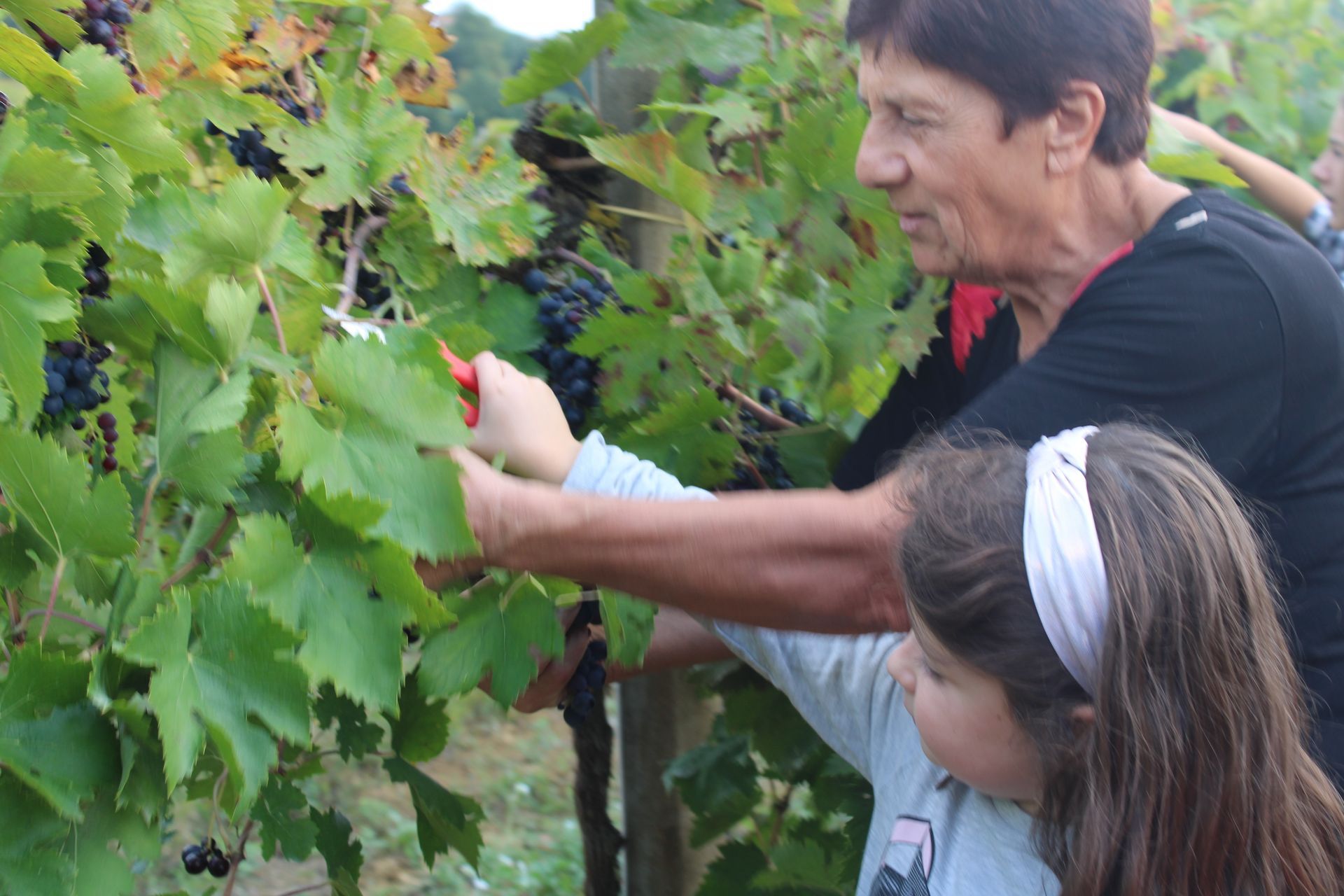
Arriving during the harvest means arriving at the most energised moment in the entire wine year. Cellar doors are not in hospitality mode; they are in working mode. Producers are focused, the air smells of fermenting must, and the pace of the day is driven by the grapes rather than a tourism schedule. For guests on a guided borGO experience, this is precisely the point. You are not watching a staged demonstration. You are present for something real, picking fruit alongside the family, carrying crates, and sitting down to a harvest lunch that has been earned rather than arranged.
Late Spring: May to June
If you cannot make the harvest window, late spring is borGO's other strongly recommended period for wine tourism in Abruzzo. The vines are in active growth, the landscape is at its most visually striking, and the weather is warm and clear without the intensity of high summer. Critically, producers have genuine time to engage. The rush of pruning is behind them, and the anxiety of harvest is months away. Conversations in the cellar tend to go longer, and the tasting experience is more relaxed on both sides of the table.
Why Summer and Peak Season Work Against You Here
July and August are peak season for coastal Abruzzo, and the region handles that beautifully. But the inland vineyard zones follow a different rhythm entirely. Heat stress is visible in the vines by mid-July, small producers are focused on canopy management and vine health rather than hosting, and the culinary culture of the region naturally shifts toward lighter, coastal-inflected fare. It is not that wine tourism stops; it is just that the energy is elsewhere.
The Shoulder Season Advantage
April through June and September through November represent the sweet spot for the kind of travel borGO is built around. Accommodation costs are meaningfully lower than peak summer, groups are smaller, and the pace of life in the villages matches the slow, attentive rhythm that makes these experiences worthwhile. You are more likely to be the only guests at a producer's table, more likely to find a winemaker who wants to talk for an hour, and more likely to leave feeling that you actually understood a place rather than passed through it.
What the Big Italy Operators Have Not Found Yet
Search any major Italy wine travel platform right now and you will find the same five regions listed in the same order. Tuscany leads. Piedmont follows. Veneto, Sicily, and Puglia fill out the roster. Planning your first wine trip to Italy on WineTourism.com names exactly those five, with zero mention of Abruzzo despite commenters actively asking for alternatives. This is not a coincidence; it is a structural pattern. The big operators built their portfolios around the regions with existing tourist infrastructure, and the platforms indexed what the operators already sold. The result is a self-reinforcing loop that keeps Abruzzo invisible regardless of what is actually in the bottle.
That invisibility has a measurable shape. Major Italy travel aggregators list wine tours as a named product category and return no Abruzzo-specific results. That is not a reflection of the region's wine quality. It is a reflection of where operators have chosen to invest their attention, and where they have not.
This is where the opportunity sits. The Mordor Intelligence Italy wine tourism market report projects specialist platforms and tour operators as among the highest-growth distribution channels through 2031. borGO is already operating as an embedded ground partner in Abruzzo, working with a network of more than 160 local producers and winemakers, including those tied to the Villamagna DOC. None of the specialist platforms that are projected to grow have catalogued this territory yet.
For the traveller who has already done Chianti and Barolo and is looking for the next honest, unmediated wine region, the absence of crowd infrastructure in Abruzzo is the point. The tasting room where you are the only visitor, the winemaker who pours for you personally, the lunch that was not designed for tour groups: these things exist in Abruzzo precisely because the big operators have not arrived.
That window will not stay open indefinitely. Priorat, Etna, and Swartland each had roughly five to eight years before mass tourism infrastructure changed the character of the experience. By all current indicators, Abruzzo's equivalent window is open right now.
How to Plan a Wine Tour in Abruzzo
Everything covered so far tells you why Abruzzo deserves a wine tour. Here is the practical side: how to actually put one together so it delivers on that promise.
Choose your base before you plan anything else.
Resist the instinct to plot a circuit across the region. Abruzzo's wine country rewards depth, not distance covered. Pick a single village as your anchor, ideally one with proximity to both vine-growing land and the wider landscape, and let the itinerary radiate outward from there. Each day builds on the one before it. You start recognising producers' names, understanding which valleys face south, noticing how the altitude shifts the flavour of the same grape. That accumulation of context is what turns a wine trip into a wine education. A circuit itinerary gives you snapshots. A fixed base gives you a story.
Book through a ground operator who has actual relationships with producers.
Most Abruzzo wineries do not run formal daily tasting rooms. Visits happen by arrangement, which means the booking mechanism is a phone call, often in Italian, to a family who may never have hosted a foreign visitor before. An OTA listing cannot replicate that access. What opens those doors is prior relationship, trust built over time, and the credibility that comes from a local operator vouching for you. The difference between a ticketed group tasting and sitting at a table with a winemaker who has agreed to host you specifically is significant, and it is only achievable through that kind of groundwork.
Give the wine portion at least three to five days.
A single day is enough to buy a bottle. It is not enough to understand a region. The experiences that make Abruzzo wine travel genuinely memorable- harvest participation in September and October, a cellar-door dinner, a cooking class built around food and wine pairing- all require overnight context and a slower pace. Budget at least four days for the wine-focused portion of your itinerary and you will leave with something resembling real knowledge.
Build in at least one non-wine experience.
A morning hike in the Gran Sasso foothills, a visit to a local artisan, a market in a hill village: these are not distractions from the wine focus. They are what makes the wine make sense. Abruzzo's identity is coherent across its landscapes, its food, its crafts, and its agriculture. Seeing the terrain the grapes grow in changes how you taste them.
For travel designers and tour operators: borGO works as a wholesale ground partner for groups looking to add an Abruzzo wine module to an existing Italy itinerary.
Bespoke programming is built around the fixed-base village model and the Villamagna DOC, with the full network of local producers and accommodations behind it. If you are designing an Italy programme and Abruzzo is not yet in it, that gap is worth a conversation.
The Case for Abruzzo Is Already Made
The argument has been made across this entire piece, and it holds. World-class wine at prices that have not yet caught up with the quality. Direct access to the producers who actually grew the grapes. A named DOC, Villamagna, sitting in the same village where you are staying. A natural wine current that serious travellers are only beginning to trace. And a food culture, built from arrosticini, mountain cheeses, and coastal seafood, that makes every glass taste more like somewhere.
The timing piece matters too. The global wine tourism market is on course to more than double, from roughly $49 billion in 2025 to over $103 billion by 2031. Abruzzo has just entered the international editorial conversation, named by VinePair among the top wine destinations for 2026, while the infrastructure of overtourism has still not arrived. Tuscany draws 14 million wine visitors a year. Abruzzo offers the same depth of terroir and producer culture without the crowds, the queues, or the staged tasting room experience that comes with them.
That window does not stay open indefinitely.
If you are planning your own trip, borGO designs village-based wine tour itineraries anchored in Villamagna. Get in touch to explore what a slow, producer-led wine experience in Abruzzo looks like in practice.
If you are a travel designer or tour operator building Abruzzo programming for European or North American clients, borGO operates as a specialist ground partner across the region. Contact us to discuss wholesale partnership and what genuine local access to Abruzzo's wine culture looks like for your travellers.
Conclusion
Abruzzo isn't a compromise. It's an upgrade.
You get authentic winemakers who actually want to share their story, prices that respect your budget, and a landscape that hasn't been filtered through a tourist lens. Most importantly, you get the Italy that most travelers never find because they never thought to look past the obvious choice.
Tuscany will always be there. But the window to experience Abruzzo before the crowds catch on? That's open right now.
So here's your next step: start sketching out your itinerary with Montepulciano d'Abruzzo at the center, a few family-run cantinas on the list, and zero apologies for going off the beaten path. The best Italian wine trip you've ever taken might be the one nobody in your circle has thought to take yet.
Go find it before they do.