
Villamagna DOC
The Montepulciano you were not expecting
Eighty-five hectares. One grape. Centuries of patient craft pressed into a single glass. Villamagna DOC is not just a wine but it is the portrait of a place that mass tourism has not yet found.

The Territory
Where the Sea Meets the Mountain
Ten kilometres from the Adriatic and ten kilometres from the Majella massif, the medieval village of Villamagna sits in a rare position: salt-tinged breezes rising up the valley each morning, cold mountain air descending each evening. This daily temperature swing is not a geographical coincidence — it is the engine behind the wine's character.
The clay-limestone soils, with south-east and south-west exposures at altitudes between 30 and 180 metres, give Montepulciano roots something to hold onto. The DOC extends across three communes — Villamagna, Vacri and Bucchianico — small rural places that share the same centuries-old calling for the vine.
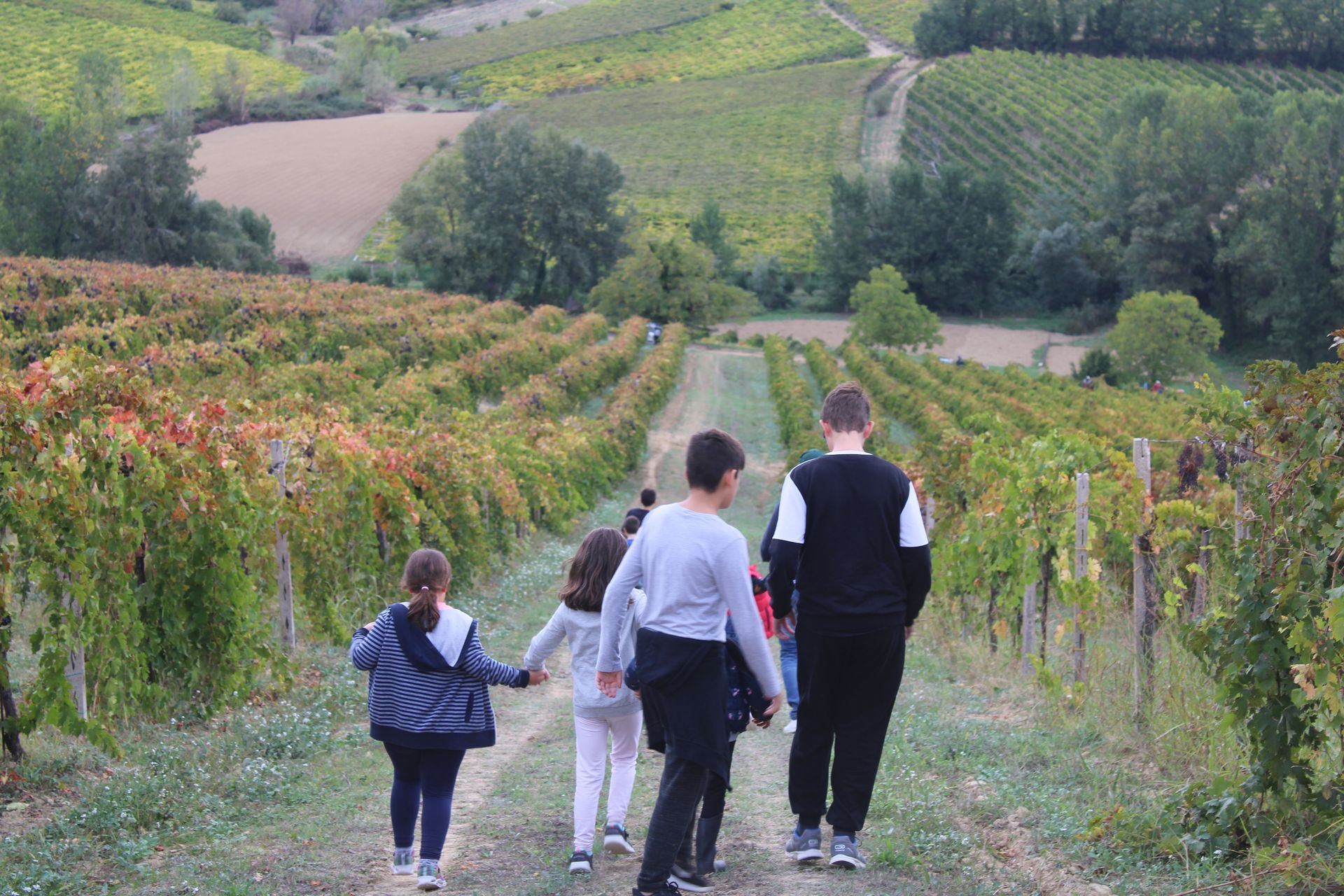
Slow travel here means walking between the rows at dusk, when the low light turns each cluster ink-dark and the air carries wild figs and warm stone.
85
Total DOC hectares
7
Local Wine Producer
700+
Years of viticulture
The Wine
A Montepulciano That Plays by Its Own Rules
Villamagna DOC earned its official recognition in 2011, but its philosophy is far older. Stricter standards than standard Montepulciano d'Abruzzo, mandatory ageing until 1 November of the second year after harvest, and a maximum yield of 120 quintals per hectare. The result is a wine that refuses to meet market timelines — it is ready when it says so, not when the calendar suggests.
Plan your stay in Villamagna with us
No two travellers arrive with the same questions. Some come for the wine others come for the village itself, the medieval lanes, the slow pace of a place that has never needed to perform for visitors. Many come for both, and leave with something they did not expect.
From a the Middle Age to Today's Glass
870 — The Benedictine Monks
The monks settle at the convent of San Severino and bring viticulture as both spiritual practice and sustenance. The vineyard becomes landscape; the vineyard becomes identity
1323 — The Archbishop's Register
The Archive of the Archdiocese of Chieti records the land around Villamagna as "terra di vigne" — land of vines. Tithes were paid in wine. The territory's vocation was already written.
16th century — The Archbishop's Palace
The palace is built at the highest point of the village, looking out over the vineyards for miles. Even the architecture faces the vine.
1960s — The Black Wine of Families
Every small farming household makes its own wine — dense, almost black, for the table. It is not sold; it is poured for neighbours, shared at harvest lunches, passed between generations.
1990s — The Quality Shift
A handful of producers begin to think beyond the family cellar. The soils, the climate, the grape — everything is already extraordinary. All that is missing is a shared vision and the courage to protect it.
2011 — Villamagna DOC Is Born
Official recognition confirms what the farmers already knew: this land deserves its own name. Eighty-five hectares, a strict disciplinare, an identity protected by law.
NOT JUST WINE
The Saint Who Stopped an Army
Did you know?
Every 13 July, the village re-enacts the miracle in one of Abruzzo's oldest and most distinctive historical pageants. Horsemen ride through the medieval streets, the Saracens invade, the saint appears, and the invaders convert.
Inside the main church, a 1746 canvas by Antonio Sarnelli depicts the scene exactly as the village has remembered it for nearly five centuries.
Slow Travel in Abruzzo
Villamagna Is Waiting.The Right Season Is Now.
September is the harvest month. October is the golden silence after the picking. Spring is the vineyard answering back. Every season has its own rhythm — choose yours.
Enjoy with us