
Hidden Villages of Abruzzo:
Where Italy Forgot to Hurry
Tucked into the folds of the Apennines, clinging to cliff edges above river gorges, scattered across high plateaus swept by mountain winds, the hidden villages of Abruzzo are not a destination you rush through. They are places you arrive at slowly and leave reluctantly. Abruzzo has more medieval borghi per square kilometre than almost any other Italian region, and 24 of them have earned a place in the national list of I Borghi Più Belli d'Italia. But the most meaningful ones — the ones that stay with you — are those where you stop being a visitor and start being a guest.
A new way of travelling
A Word Before You Go: Borghi Are Living Ecosystems
Before we name a single village, there is something important to understand. The borghi of Abruzzo are not open-air museums. They are fragile, breathing communities — social and natural ecosystems where every element depends on the next. The stone walls, the old women tending gardens, the shepherd bringing goats through the piazza at dusk, the river running cold below the valley — all of this is interconnected, and all of it is vulnerable.
Many borghi lost a third of their population in the last fifty years. Young people left for cities. Buildings crumbled. Some villages sit half-abandoned, caught between memory and silence. When a traveller arrives and spends money at the local osteria, buys saffron from the farmer, or simply sits and talks with someone at a fountain that act carries weight. Responsible, attentive travel is not a nice-to-have in these places. It is a form of care.
"Come not to consume the borgo, but to be changed by it."
That is the spirit we ask you to carry with you. Walk slowly. Speak quietly. Ask before you photograph. Stay for dinner.
A new way
The Art of Slow Travel in Abruzzo's Villages
Slow travel in a small village is less about a to-do list and more about a posture: an openness to the unexpected, the unhurried, the unremarkable moment that turns out to be the most memorable. It means arriving in the late afternoon when the light turns copper, walking the main street without a map, and letting the village reveal itself to you on its own terms.
What Slow Travel in a village actually looks like
Stay at least one night
The real village only appears after the day-trippers leave. Mornings belong to locals, and that is when you truly arrive.
Leave the car at the edge of the village
Most borghi were not built for wheels and big cars. Find a safe space outside, and just walk in. The next surprise might be in the next corner.
Learn two words in the local dialect
Even a clumsy attempt at buongiorno in Abruzzese opens a door that perfect Italian never could.
Try this:
gnà stié? (How are you?)
Eat where there is no menu in English
The nonna or the family behind the stove is the best food guide in the region. Do not be shy, just try!
Follow the sound of water
Every borgo has a fountain, a spring, a stream. Water is where community used to gathers and in some places still do.
Give something back
Buy local, book local guides, attend a village festival, donate to restoration projects you encounter. It is not mandatory, but it will be appreciated.
The Known Ones
Famous Villages Worth Every Visit
Some borghi have been discovered — and they deserve their recognition. Their fame hasn't made them false; it has helped fund their survival. These are the villages that often appear on Italy's most-beautiful-village lists, and with good reason.
Our Tip: Do not visit these villages in peak seasons. They might be full of tourists.
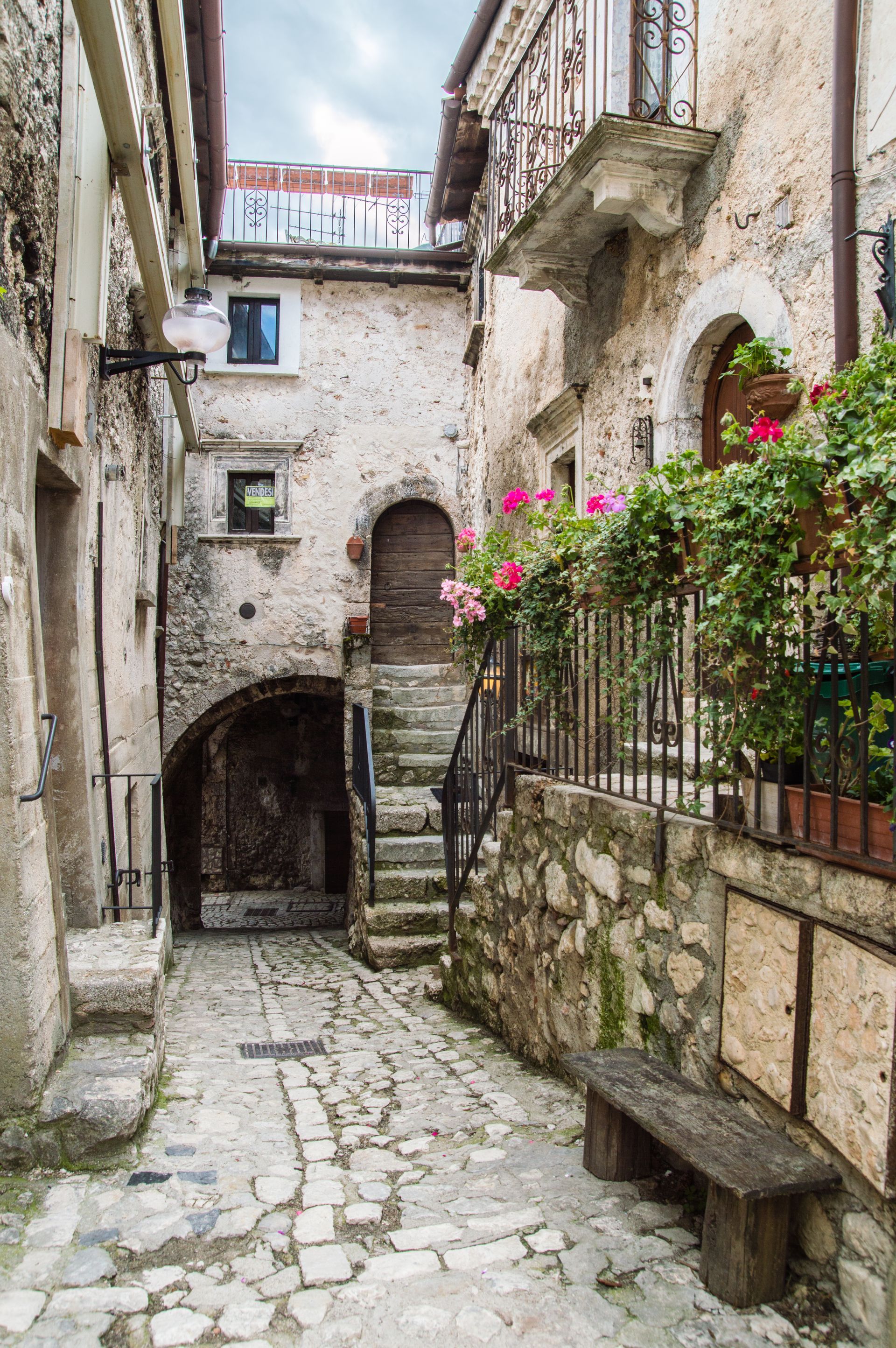
Santo Stefano di Sessanio: The Restored Dream
Perched at 1,250 metres in the shadow of the Gran Sasso, Santo Stefano di Sessanio is perhaps the most celebrated of Abruzzo's medieval village. Its stone towers and labyrinthine cobbled lanes have remained largely unchanged since the 15th century. The village was nearly abandoned until a restoration project breathed life back into it, creating a model for sustainable village revival. There are no modern streetlights here; the village intentionally resists them. Come in autumn, when mist rolls in from Campo Imperatore and the silence is complete.
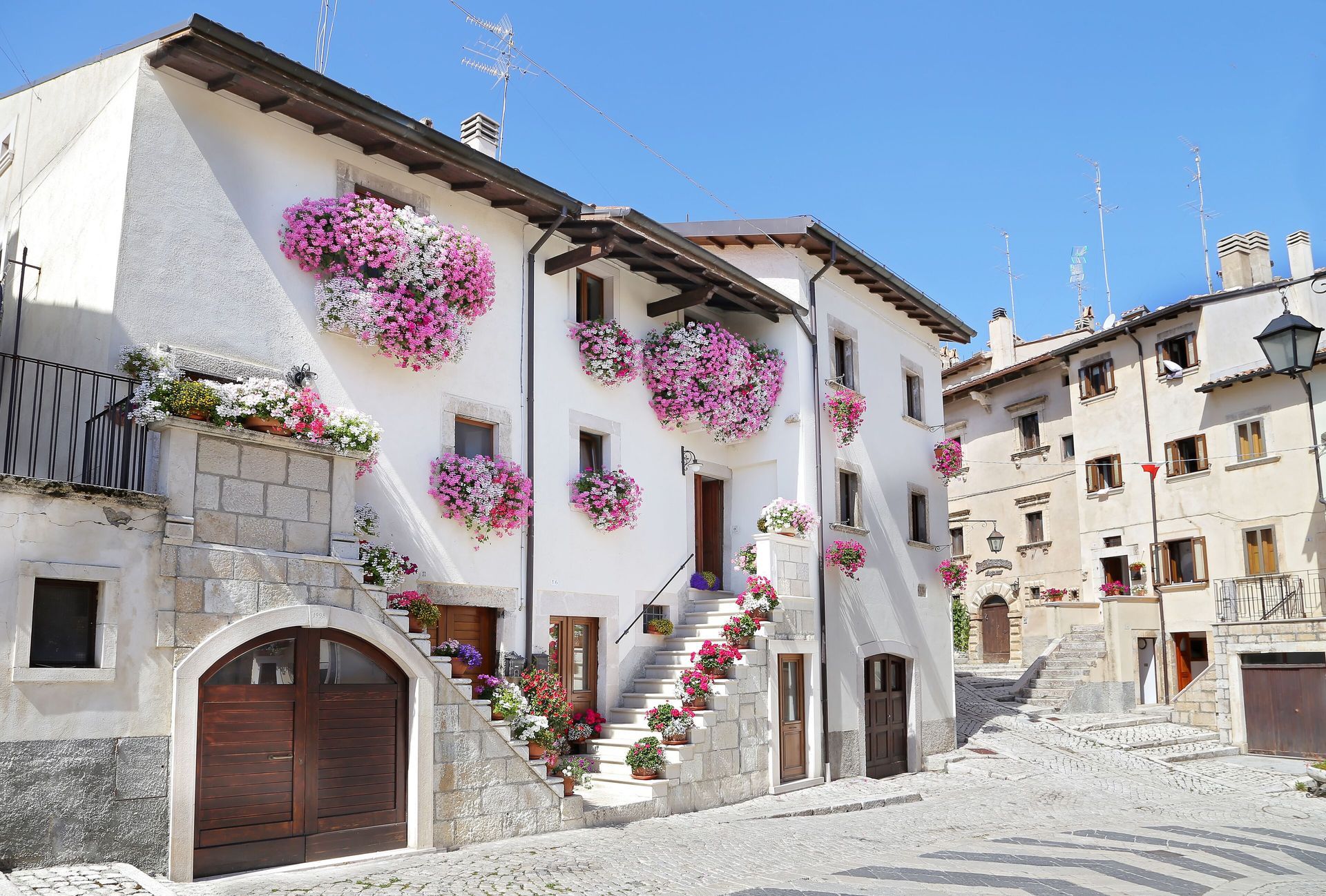
Pescocostanzo: Stone Craft and High Altitude
At over 1,300 metres in the Majella foothills, Pescocostanzo is a village of remarkable architectural coherence — its Baroque buildings, wrought-iron balconies, and lace-making traditions have been protected for generations. It is also one of the coldest inhabited villages in Abruzzo in winter, which has kept it beautifully preserved. Buy hand-made lace here and you are supporting a craft in genuine danger of disappearing.
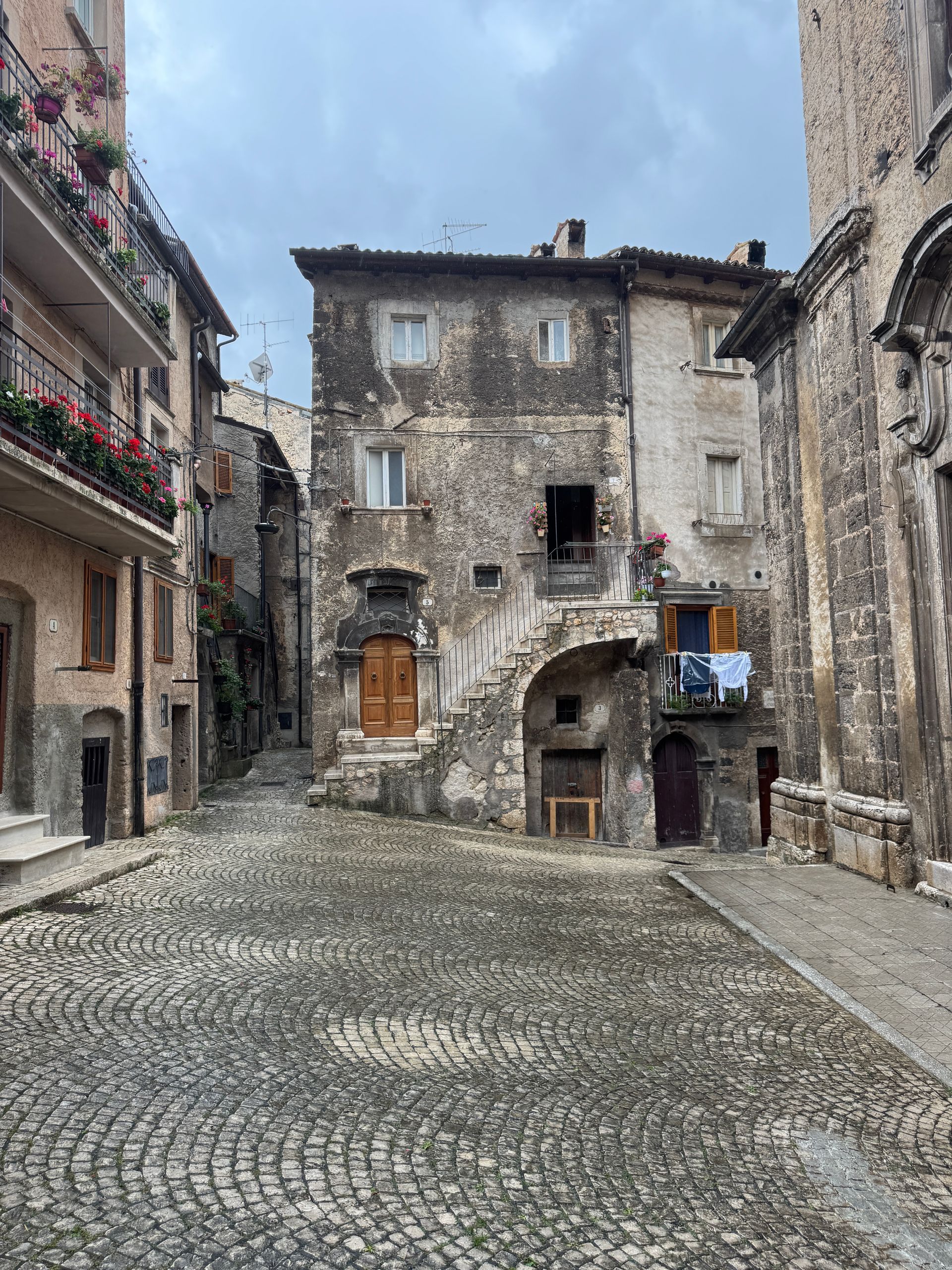
Scanno: A Village That Inspired Photographers
Scanno sits in a narrow mountain valley above a glacial lake of extraordinary colour, a deep, shifting turquoise that changes with the season. The women of Scanno traditionally wore distinctive black costumes; Henri Cartier-Bresson photographed them here in 1951. The village has been a subject of art, photography, and quiet obsession ever since. It is one of those places that earns its reputation simply by existing.
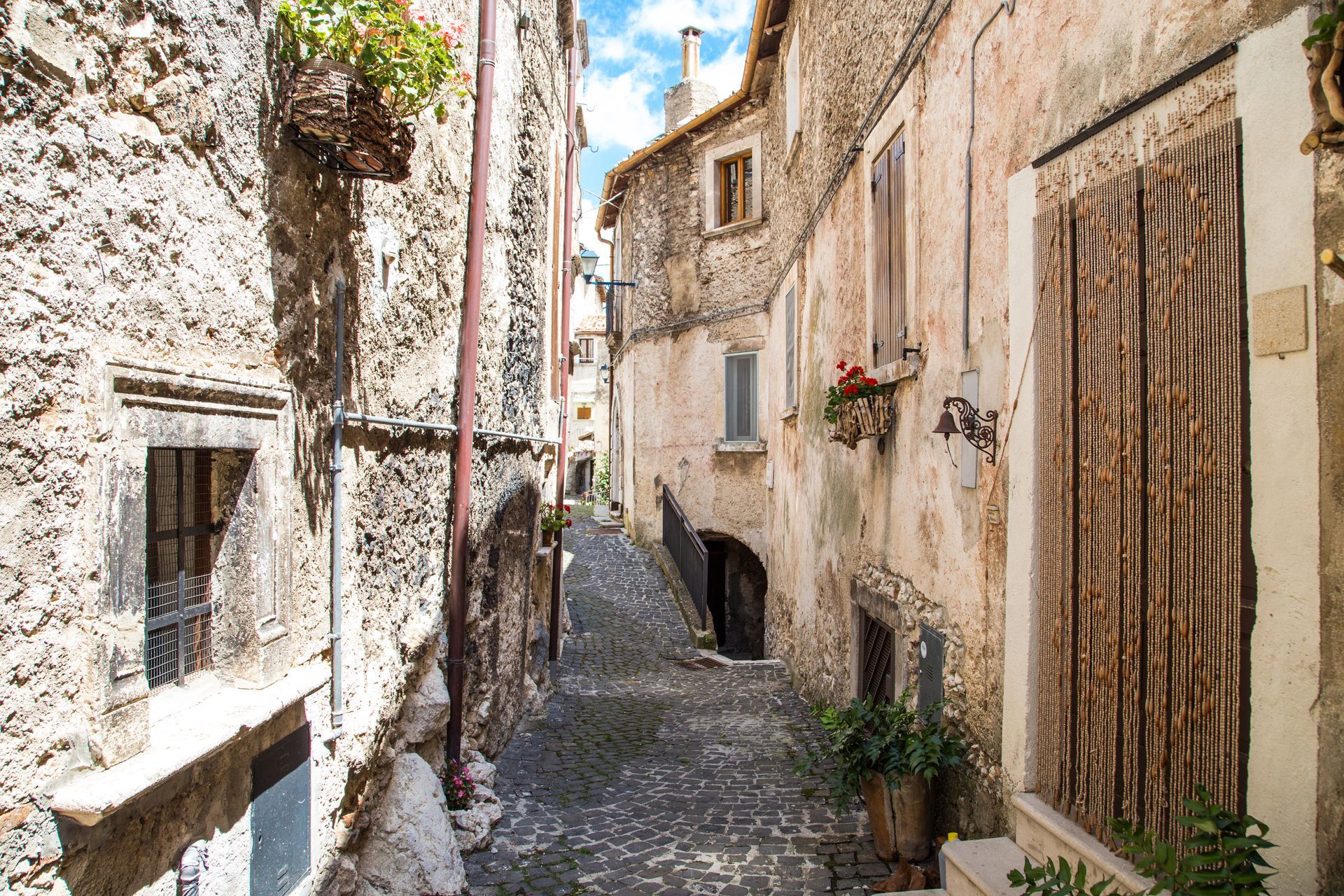
Castel del Monte: 360° Views and witch rituals
Balanced on a rocky hilltop with sweeping views of the Gran Sasso highlands, Castel del Monte offers one of Abruzzo's most satisfying centro storico walks. The village has mysterious tunnels beneath it, said in local folklore to be connected to old witch rituals — walking them reportedly wards off spells. Whether you believe that or not, the atmosphere inside them is unforgettable.
Why Fragile Places like Villages Deserve Mindful Visitors
This is the text area for this paragraph. To change it, simply click here and start editing. You can also customize the color, font and size of the text by highlighting it and choosing from the various options.
How to Be a Good Guest in a Borgo
- Book local accommodation: an agriturismo, a family-run B&B, a restored historic room. Not a platform that extracts money from the community.
- Ask who made your food: The closer you get to the source, the more the community benefits.
- Support restoration projects: Many villages have active foundations working to restore historic buildings. A small donation goes a long way.
- Photograph with permission: People are not scenery. A portrait of an elderly woman in her doorway deserves a moment of human connection first.
- Come back in low season. The village in February is the real village. The tourists are gone, the wood stoves are burning, and the community is itself again.
- Tell others but carefully. Share your experience, but resist the impulse to publish exact locations of truly secret places. Some corners of Abruzzo are precious precisely because they are unknown.
Plan Your Visit
Getting to the Borghi of Abruzzo
Most of Abruzzo's hidden villages are accessible by car and often only by car. A few can be reached by regional bus, but schedules are designed for locals, not tourists. The ideal way to explore multiple borghi is a slow road trip over three to five days, letting the landscape dictate the pace.
Best Time to Visit
Spring (April–June): mild temperatures, villages awakening after winter.
Early Autumn (September–October): saffron harvest, truffle season in the forests, and far fewer visitors than summer.
Winter (December–February): villages at their most authentic: quiet, cold, honest. Some roads may close in heavy snow. Check before you go.
Summer (July–August): beautiful but busier. The famous ones fill up on weekends.
Combine Your Village Visit With
A walk in the Gran Sasso e Monti della Laga National Park — the borghi here are portals into a remarkable mountain ecosystem
Kayaking or swimming in the Tirino River, one of Italy's clearest rivers, which flows through ancient village landscapes
A meal centred on arrosticini (lamb skewers), pecorino cheese, and local Montepulciano d'Abruzzo wine — the true tastes of the territory