The question is reasonable: Italy has trains. Italy has buses. Italy has a reputation for being a country where you can turn up, find your platform, and go. Can you do that in Abruzzo?
The honest answer is: partially. Abruzzo’s public transport reflects its geography, which is not flat. The coastal strip has decent connections. The main cities, Pescara, Chieti, and L’Aquila, are connected by rail. But a significant portion of the region, including most of the medieval borghi and mountain areas that are the real draw for independent travellers, is not practically reachable by public transport alone.
Here’s a realistic guide to what you can do, what you’ll struggle with, and how to fill the gaps.
New to Abruzzo? Read our Travel Guide or explore what we can do for you.
The Rail Network: What It Covers
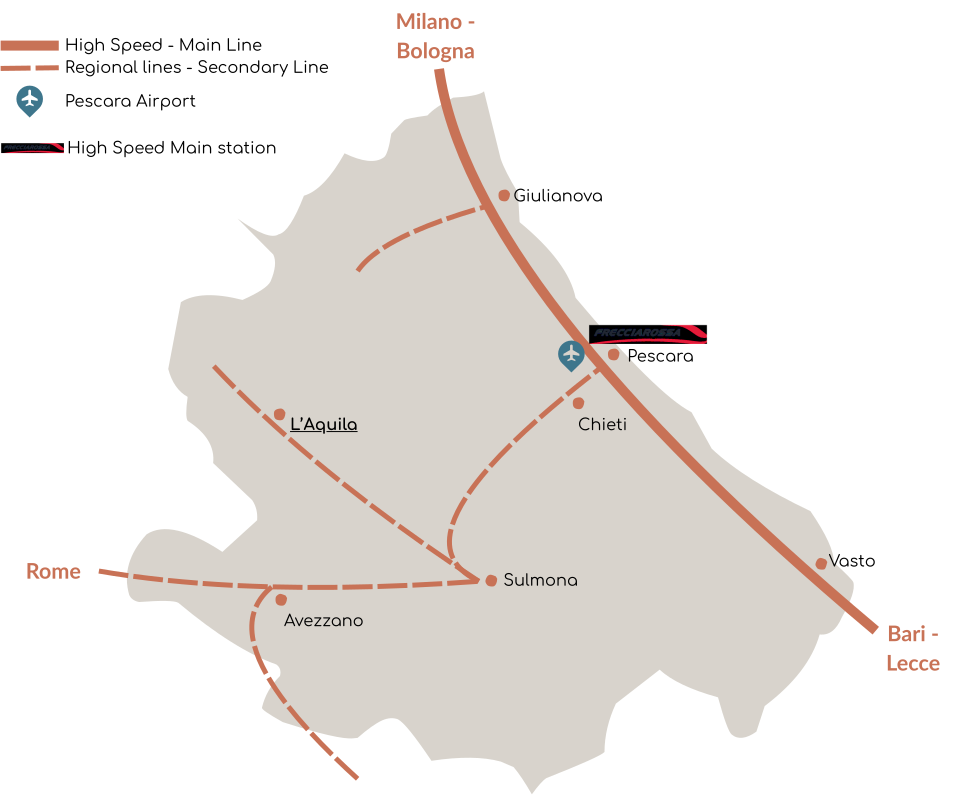
Abruzzo’s main rail line runs along the Adriatic coast, connecting Pescara to Lanciano, Vasto, and down toward Bari in the south. It’s fast, frequent, and useful if you’re moving between coastal towns.
The Pescara–Roma line crosses the Apennines via the A24 corridor, stopping at L’Aquila and Avezzano. This is one of the most spectacular rail journeys in central Italy; the train climbs through the Gran Sasso massif and emerges onto the Fucino plain with views that will make you put your phone down. It’s also genuinely useful: it connects Abruzzo to Rome in about 3 hours and gives you access to L’Aquila.
The Sulmona–Alfedena line through the Sangro valley is extraordinary in a different way: it’s a historic single-track railway that runs through the Abruzzo National Park, almost entirely through wilderness. Occasional tourist trains run this route in summer, the Ferrovia dei Parchi, and it’s worth planning around.
What the trains don’t reach: Scanno (you can get to Sulmona by train, then bus), Castelli, Pietracamela, Navelli, the Trigno valley, the Majella’s interior villages, the Trabocchi’s more scenic coves. In short, the trains cover the arteries, not the capillaries.
Local tip: The Abruzzo train system uses Trenitalia and some regional operators. Buy tickets in advance for intercity routes; for regional trains, paper tickets are often still purchased at the station. Mobile signal in the mountains is unreliable don’t depend on a digital ticket where there’s no network.
The Bus Network: More Coverage, Less Convenience
Regional buses (TUA and various local operators) cover significantly more of Abruzzo’s territory than the trains. There are bus services to Scanno from Sulmona, to L’Aquila from Pescara, to the Majella foothills towns, and to many of the smaller communities that the train ignores.
The catches are the usual catches with rural Italian buses: services are infrequent (sometimes once or twice a day on minor routes), they operate on school-and-work schedules that don’t align with visitor patterns, and they stop for the weekend. A bus that runs at 7:30 am and 14:00 is not useful to a traveller who wants to arrive at a village at 10 am, spend three hours exploring, and leave at 2 pm.
For a visitor on a relaxed itinerary who is willing to adjust their schedule to the bus timetable, the regional bus network can work. For anyone who wants freedom to move when they want, it will be a source of frustration.
Practical tool: The TUA Abruzzo website has route and timetable information. Google Maps covers most Abruzzo bus routes reasonably well, though it sometimes underestimates journey times on mountain roads.
Where a Private Driver Makes All the Difference
The gap between “what the buses cover” and “where you actually want to go” is where a private driver becomes the practical solution rather than a luxury.
For visitors who don’t drive or don’t want to, a private NCC driver booked through a licensed operator fills this gap entirely. You decide where you want to go and when. The driver handles the mountain roads and the parking, which in several Abruzzo villages is a genuinely complex logistical problem. You spend the journey looking at the landscape.
For a group of two to four people, the cost of a private driver for a day is often comparable to two car-hire days when you factor in fuel, parking, and the stress variable. For a couple wanting to visit three or four borghi in a day without one person spending four hours driving instead of seeing, it’s usually worth it.
borGO offers licensed NCC services across the region. From airport transfers to full-day village itineraries, our drivers know the roads and can get you to places the sat-nav doesn’t. See our transport services or contact us to discuss your trip.
The Trabocchi Cycle Path: A Genuine Alternative
For the coastal section of Abruzzo, there’s an increasingly good option that requires no car and no bus: cycling. The Via Verde — the former Adriatic railway line, now converted to a shared pedestrian and cycling path — runs for 42 kilometres along the Trabocchi Coast between San Salvo and Ortona.
This is one of the genuinely wonderful things to do in Abruzzo without a car. The path runs past the trabocchi (the extraordinary wooden fishing machines that jut out over the sea), through tunnels cut into the rock face, and along clifftops with views across to Croatia on clear days. Bikes can be rented at several points along the route.
It’s not strenuous, it’s visually spectacular, and it connects several seafood restaurants and beach spots that would otherwise require a car to reach. Allow a full day for the full route, or do sections of it from any point.
Local tip:
The path is busier at the weekend and in school holidays. A weekday morning in September or October, with the sea light still soft and almost nobody else on the path, is something else entirely.
Check your experiences far from the crowds
Walking Within the Villages
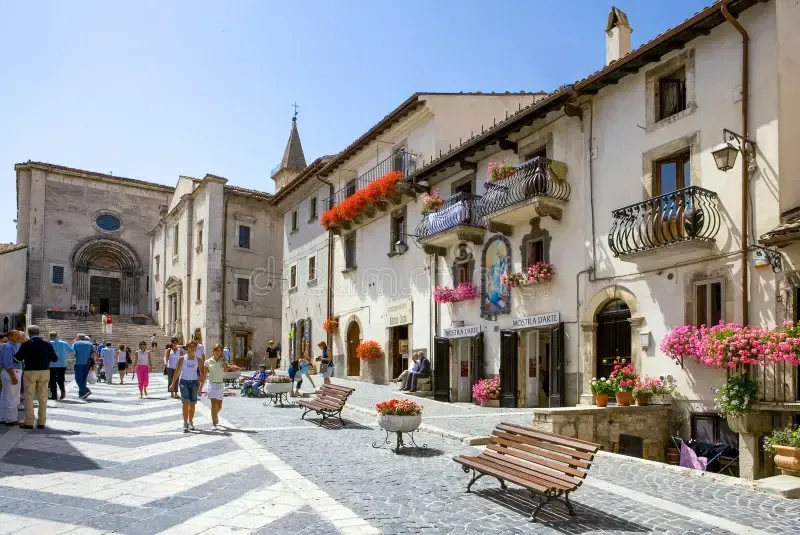
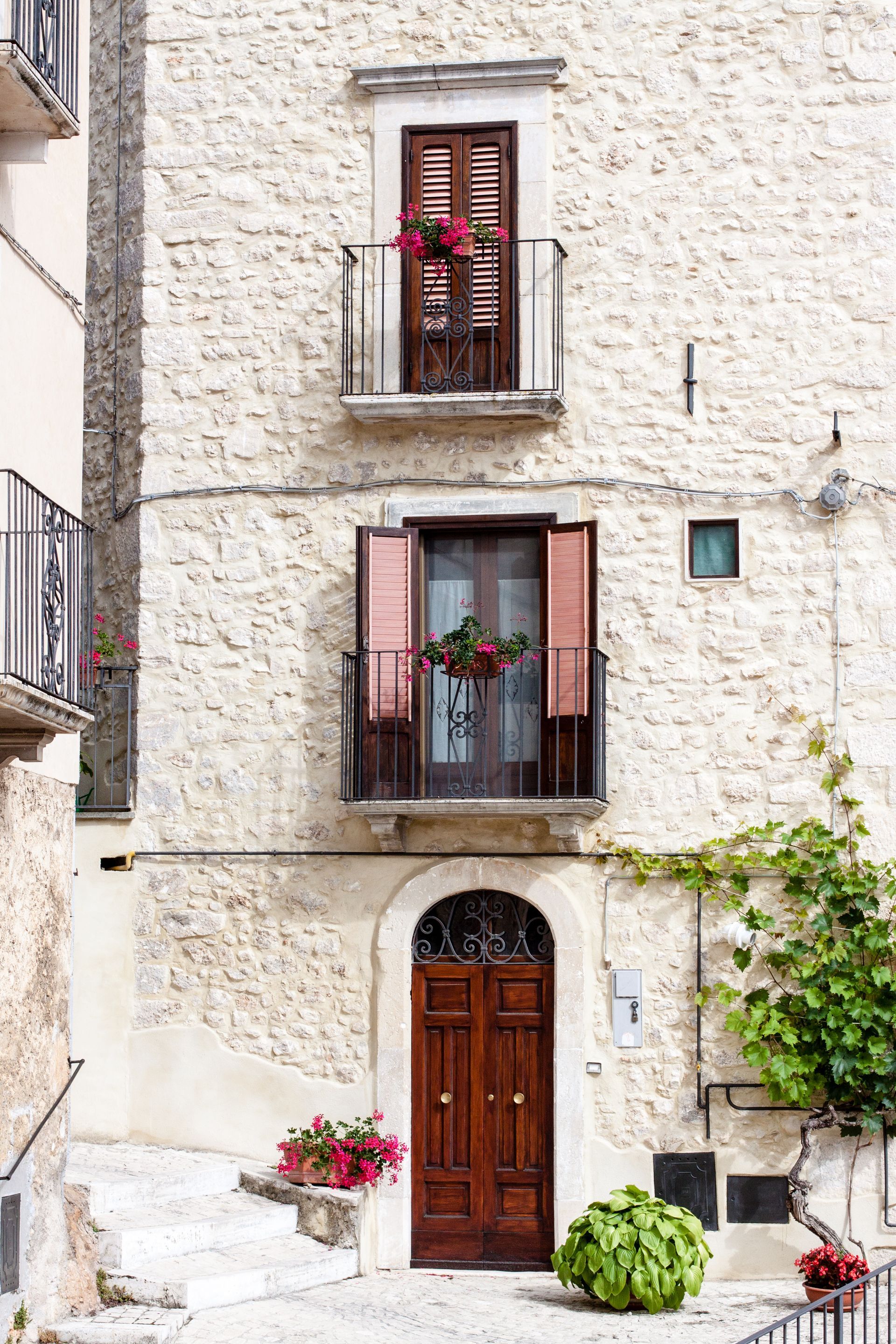
Here’s the thing about Abruzzo’s borghi: once you’re in them, the car is irrelevant. These are walking places by definition — the medieval street network was designed for people and animals, not vehicles. The best exploration of Scanno, Pacentro, or Atri happens on foot, at a slow pace, taking wrong turns that turn out to be right ones.
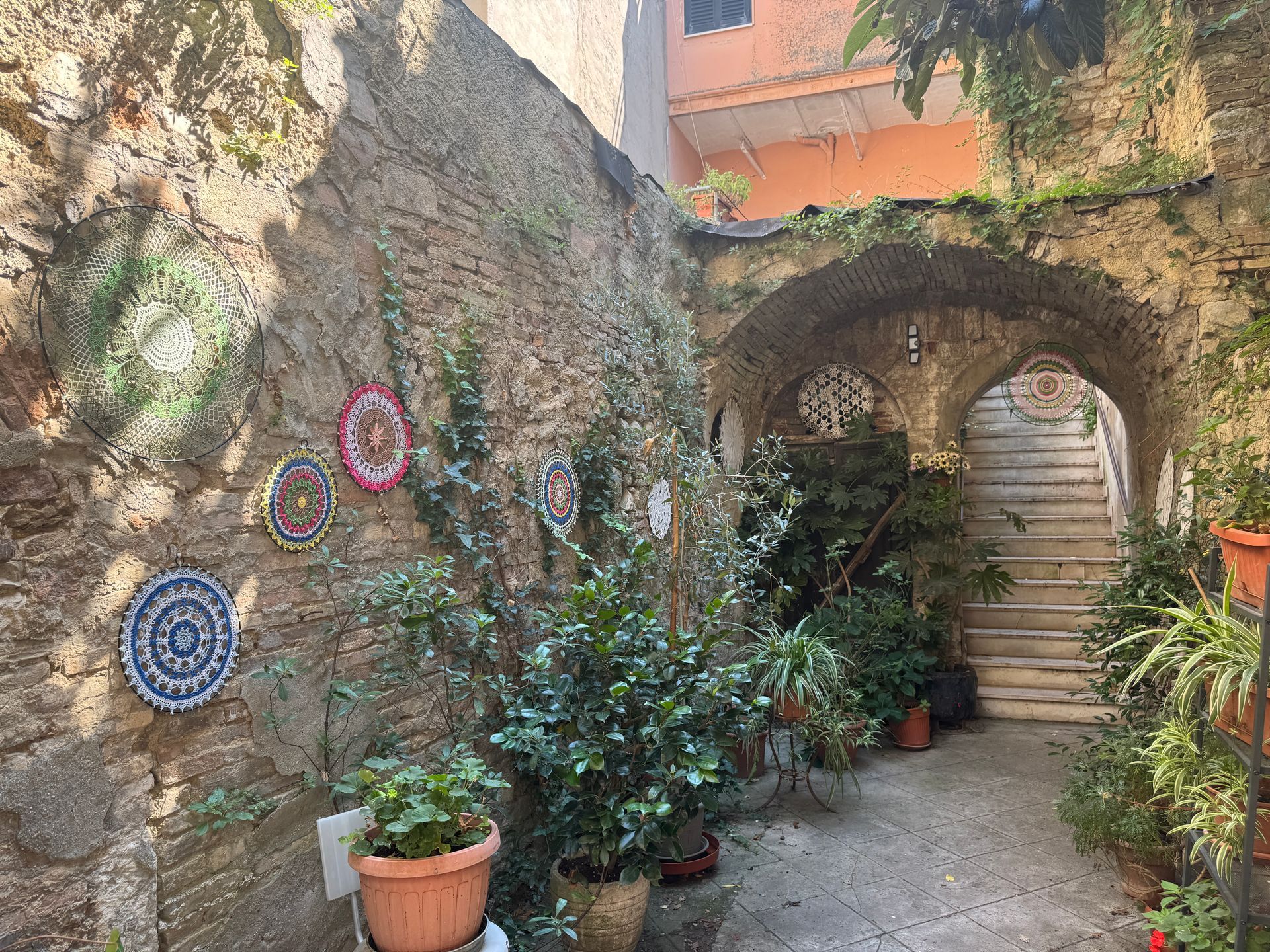
If you can solve the “getting there” problem — by bus, driver, or rental car — the “being there” part is entirely pedestrian. And that’s where Abruzzo reveals itself: in the street that goes nowhere, the courtyard behind the locked gate that turns out to be open, the bar where the owner asks where you’re from and ends up talking to you for forty minutes about the village’s history.

A Realistic but not slow Itinerary Without a Car
Here’s what a five-day Abruzzo trip without a rental car could look like:
Day 1–2: Pescara base. Arrive by train from Rome (direct, 3 hours). Pescara itself has a good museum, the Dannunziana, and excellent seafood. Day trip by bus or train to Chieti (30 min), a hilltop city with one of the best archaeological museums in Italy.
Day 3: The Trabocchi Coast by bike. Rent bikes in Lanciano or Fossacesia and cycle the Via Verde south toward San Salvo. Lunch at a trabocco — book in advance.
Day 4: Sulmona by train. The direct train from Pescara takes about 90 minutes. Sulmona is one of the most beautiful cities in the region — Roman origins, medieval aqueduct, the confetti capital of Italy (no, not paper confetti; sugar-coated almonds). Walkable from the station.
Day 5: L'Aquila by train. The Intercity from Pescara reaches L’Aquila in about 2 hours. The city is extraordinary and, in 2026 as Italian Capital of Culture, particularly vibrant. The rebuilt historic centre is worth a full day.
For borghì and mountain villages, add at least one day with a private driver. The experience is worth it, and the gap between what’s accessible by public transport and what Abruzzo actually offers is too large to ignore.
Check our experiences and packages for you
Our Frequently Asked Questions
Is there a train from Rome to Abruzzo?
Yes. The regional train Roma Tiburtina – Pescara takes approximately 3 hours and is one of the more spectacular rail journeys in central Italy, crossing the Apennines via Sulmona. Trains run several times a day.
Can you get to Scanno without a car?
Yes, but it requires planning. From Pescara or Rome, take the train to Sulmona. From Sulmona, there is a bus service to Scanno (TUA). The service is infrequent, so check the timetable before you travel. It’s about 30–40 minutes by bus from Sulmona.
What is the Via Verde in Abruzzo?
The Via Verde is a 42-kilometre cycling and walking path along the Trabocchi Coast, built on the former Adriatic coastal railway line. It’s one of the best car-free experiences in Abruzzo — visually stunning and physically manageable. Bikes can be rented at several points along the route.
Does borGO offer guided transport?
Yes. We provide licensed NCC (non-commercial transport) services — private drivers and transfers — across the region, as well as fully guided experiences that include all transport. Contact us to discuss your itinerary.