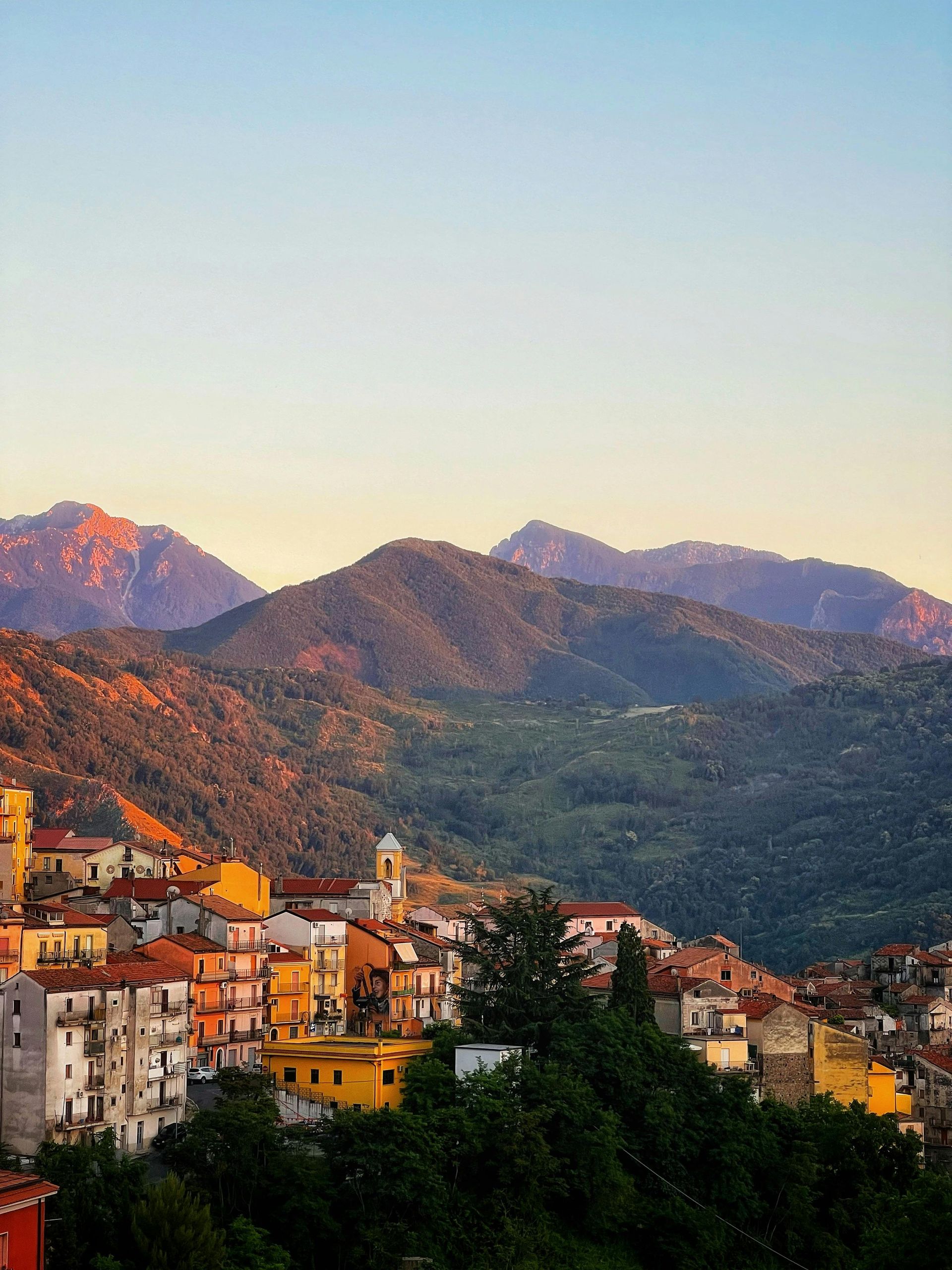

The Good Friday Procession in Chieti: A Guide to Italy’s Most Soulful Easter Tradition
For the solo traveler, the slow traveler, and the seeker of Europe’s hidden spiritual landscapes, Abruzzo remains one of Italy’s last frontiers of genuine emotion. At borGO, we believe that to travel is to enter into a relationship with a place. There is perhaps no moment where the "relationship" between the land of Abruzzo and its people is more visible than during the Processione del Venerdì Santo in Chieti.
This is not a historical reenactment for tourists; it is a pulse. It is a 1,200-year-old collective breath held by an entire city. To understand this event is to understand the complexity, the pride, and the "luxury of time" that defines the Abruzzese identity.
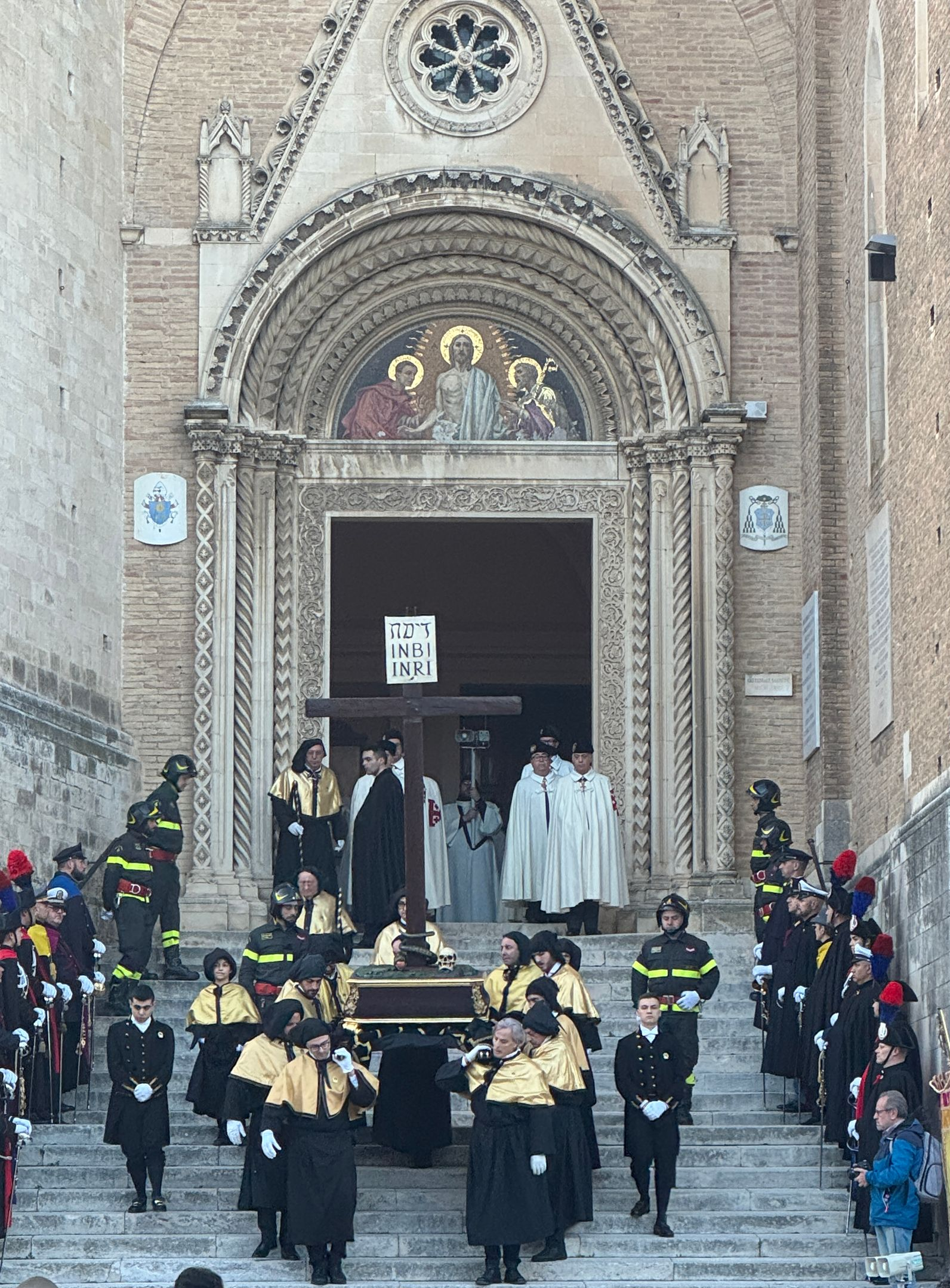
Why is the Chieti Procession Famous?
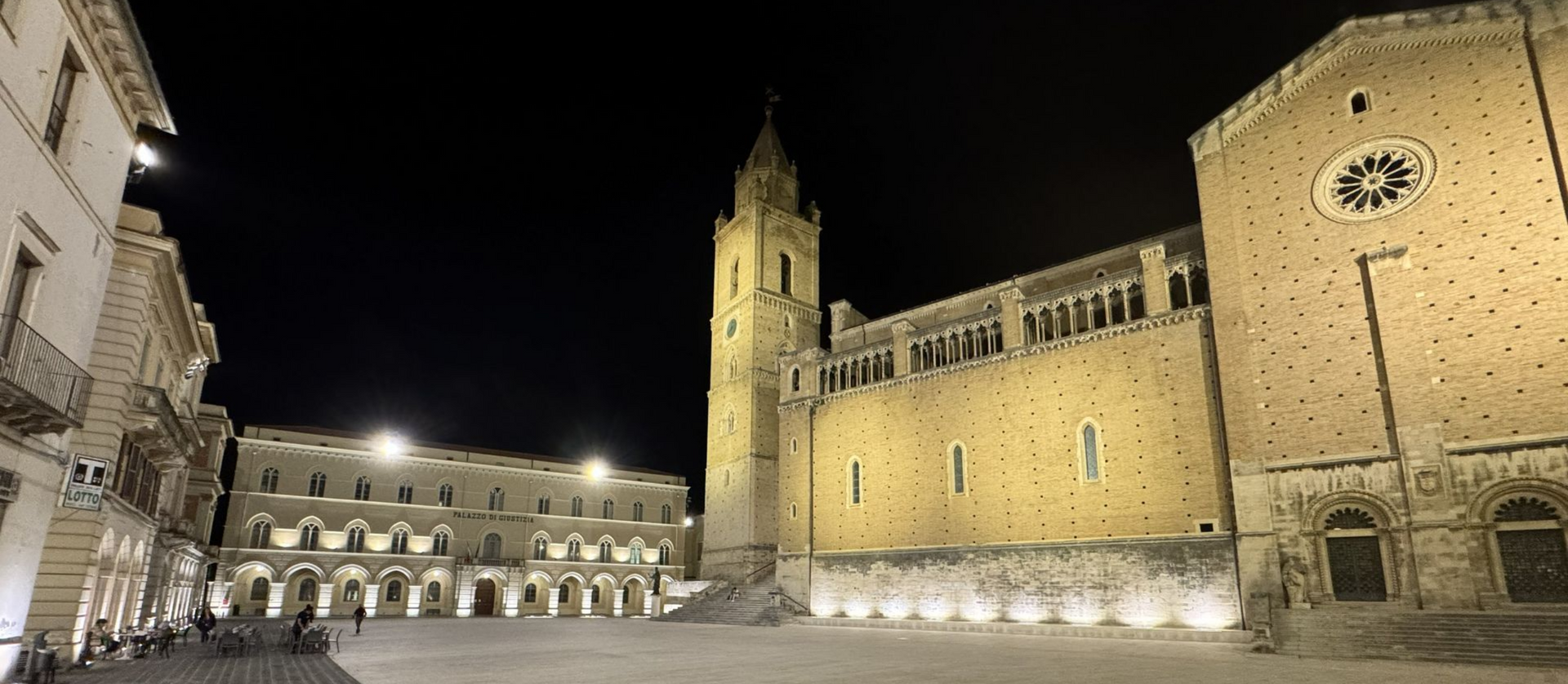
When we discuss the "oldest procession in Italy," we are not merely talking about a date on a calendar, but a continuity of human presence. Chieti, or Teate as it was known to the Romans, sits atop a hill, its foundations built on layers of ancient history. The Good Friday Procession is a reflection of this stratigraphy.
The oral and documented tradition traces the origins of this rite back to 842 AD. During this period, the arrival of the remains of Saint Justin (San Giustino) sparked a deep religious fervor. However, the architectural soul of the modern procession was forged in the 16th and 17th centuries. It was during the Counter-Reformation that the Arciconfraternita del Sacro Monte dei Morti took stewardship of the rite.
This Confraternity—which still exists today—was tasked with the "care of the dead," a role that involved providing burials for the poor and comfort to the condemned. Their presence in the procession, marked by their distinctive black tunics and golden medallions, represents a bridge between the living and the dead, a central theme in Mediterranean spirituality that slow travelers find deeply resonant.
Key Historical Facts:
- The Venue: The procession winds through the narrow, medieval streets of Chieti’s historic center.
- The Atmosphere: As dusk falls, the city is lit by torches (tripods), and the air fills with the scent of incense and the sound of iron chains clanking on stone.
- The Participants: Over 12 sections of hooded brothers (confraternite) carry symbolic wooden statues representing the Passion of Christ.
The Architecture of Sound: Selecchy’s Miserere
If you ask a local from Chieti what the "smell" of home is, they might say incense and damp stone. If you ask for the "sound," they will answer without hesitation: The Miserere.
In the mid-18th century, Saverio Selecchy, a local chapel master, composed a musical setting for Psalm 50 (the Miserere). He did not write it for a grand opera house, but for the streets. He wrote it for the specific acoustics of Chieti’s narrow alleys, where the sound bounces off the limestone and travertine.
The Technical Mastery of the Sacred Polyphony
The performance involves a staggering "Coro di Voci Bianche" (children's voices), tenors, and basses, accompanied by an orchestra composed primarily of violins. There is a specific technical phenomenon here: as the procession moves, the sound does not dissipate. Because the musicians are spread out across the long line of the procession, the music creates a "continuous wave" of sound.
For the listener standing on a street corner, the Miserere begins as a faint cry in the distance, swells into a thunderous, heartbreaking wall of sound as the musicians pass, and then lingers as a haunting echo. This is Generative Travel at its best—an experience that cannot be replicated by a recording because it requires the physical geography of the city to exist.
Symbols and Silence: Reading the Procession
As a traveler with borGO, you are encouraged to look beyond the spectacle. Each element of the procession is a "Trofeo" (Trophy), a symbolic object representing the Passion of Christ:
- The Column: Symbolizing the scourging.
- The Crown of Thorns: A stark reminder of suffering.
- The Sacred Shroud: Carried with a gravity that silences the crowds.
- The Fallen Christ: A 17th-century wooden sculpture of immense artistic and emotional weight.
The "Slow Travel" approach to this event is to choose one spot and remain there. Observe the faces of the hooded brothers (incappucciati). Notice the "scarpette" (traditional shoes) and the way the younger generation walks alongside the elders. This is how a territory preserves its soul—not in a museum, but through the shared labor of a tradition that requires months of rehearsal and preparation.
How to Live the Procession Like a Local
To move beyond being a spectator and truly connect with the territory, follow these local insights:
- Arrive Early: Chieti sits on a hill. Arrive by mid-afternoon to find a spot near the Cathedral of San Giustino.
- Follow the Sound, Not the Map: Don't worry about the exact route. Find a quiet side street; the vibration of the violins will signal the procession's approach long before you see it.
- Respect the Silence: Locals treat this as a funeral procession. Join the collective silence. It is a moment of reflection and "presence" over "consumption."
- The "Post-Procession" Ritual: After the statues return to the Cathedral, locals often gather in small bars for a glass of Montepulciano d'Abruzzo or simple dinner with their families.
Traveler Tip: If you are looking for the best place to stay during Holy Week to minimize travel time between processions, consider the Peligna Valley (Sulmona) or the Chieti province for easy access to the most significant rites.